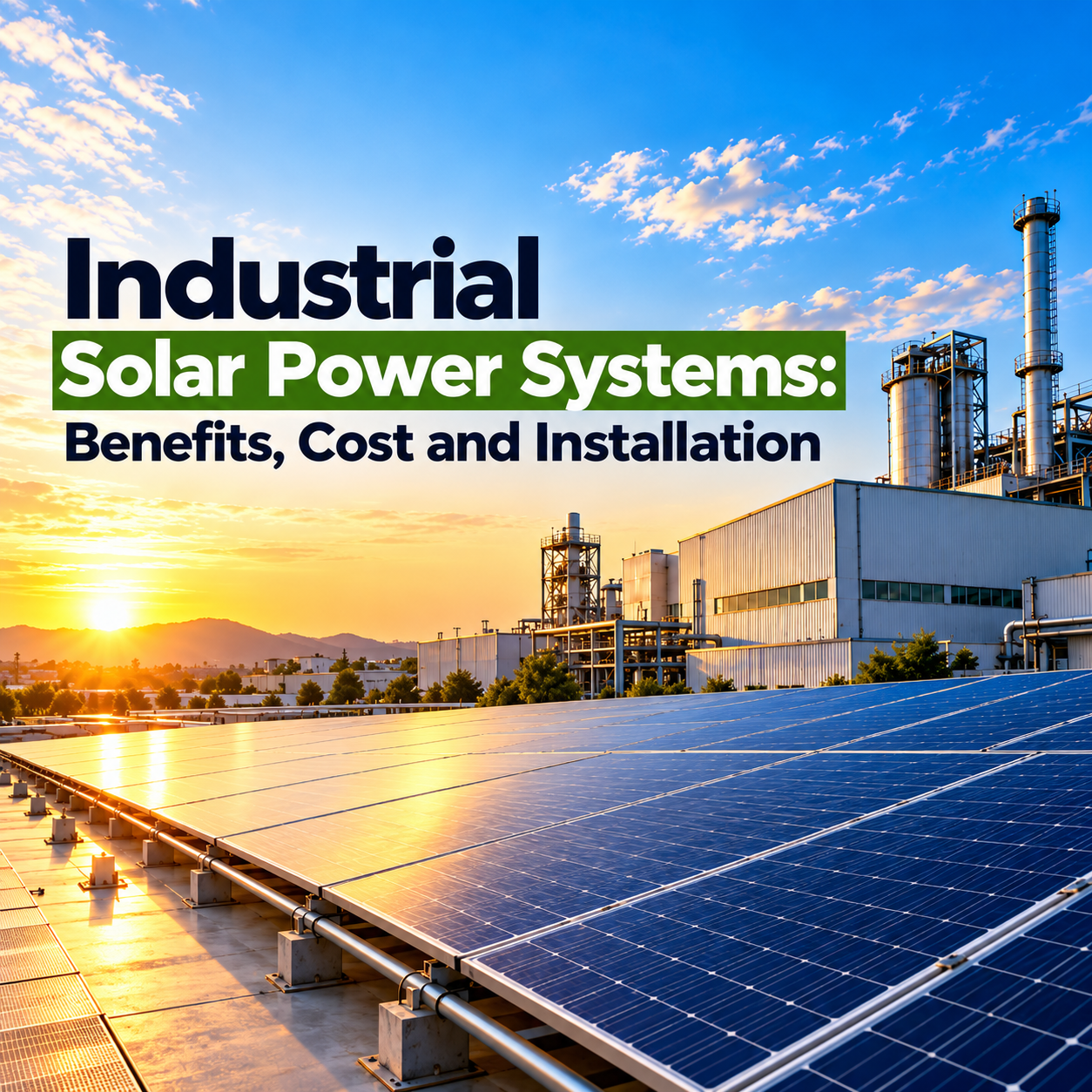
Industrial Solar Power Systems: Benefits, Cost and Installation
For industrial businesses, electricity is more than a utility expense. It directly affects production costs, operational efficiency, and long-term profitability. In Vasai, Maharashtra, where manufacturing units, industrial sheds, and warehouses support a wide range of businesses, managing electricity consumption has become an important part of business planning. An industrial solar power system offers a practical way to generate electricity using sunlight and reduce dependence on conventional grid power. By installing solar panels on suitable factory rooftops or available land, businesses can make better use of their property while supporting their energy requirements.
However, choosing the right solar installation requires more than purchasing solar panels. Businesses need to evaluate their electricity consumption, available installation space, project budget, expected power generation, and long-term maintenance requirements.
This guide explains the benefits, cost factors, and installation process for industrial solar power systems in Vasai, helping business owners understand what to consider before investing.
Understanding Industrial Solar Power Systems
An industrial solar power system uses photovoltaic (PV) panels to convert sunlight into electricity. The electricity generated can be used to operate manufacturing machinery, lighting systems, ventilation equipment, computers, and other electrical loads. A typical industrial solar installation includes solar modules, inverters, mounting structures, electrical cabling, protection equipment, earthing, and monitoring systems. The exact configuration depends on the facility's electricity requirements and site conditions.
Businesses in Vasai can consider different solar configurations depending on their operational needs.
- Grid-connected solar systems: These systems operate alongside the utility electricity supply and can help businesses use solar-generated electricity during production hours.
- Hybrid solar systems: These combine solar generation with battery storage when backup power or energy storage is required. Their suitability depends on the facility's load profile and technical requirements.
- Ground-mounted solar systems: These installations use suitable land instead of factory rooftops and may be considered when sufficient space is available.
Selecting the appropriate configuration starts with understanding how much electricity the business consumes and when that electricity is needed.
Major Benefits of Industrial Solar Power Systems in Vasai
1. Better Control Over Electricity Expenses
Electricity consumption can represent a substantial operating expense for industrial facilities. Solar power allows businesses to generate a portion of their electricity on-site instead of purchasing every unit from the grid.
For factories that operate during daylight hours, a properly sized solar installation can supply electricity directly to production equipment and other connected loads. The financial benefit depends on the electricity tariff, solar generation, self-consumption, and applicable utility charges. A detailed assessment of electricity bills is therefore essential before estimating savings.
2. Productive Use of Industrial Rooftops
Many factories and warehouses have large roof areas that can potentially accommodate solar panels. Installing a rooftop solar system can turn otherwise underutilised space into an electricity-generating asset without requiring additional land.
For industrial properties in Vasai East, Waliv and Golani Naka, rooftop solar feasibility should be assessed according to roof dimensions, structural strength, shading, waterproofing, and safe maintenance access.
A professional inspection helps identify potential issues before installation begins.
3. Improved Long-Term Energy Planning
Businesses need predictable operating costs to plan production, manage budgets, and maintain profitability. Industrial solar can help offset a portion of purchased electricity and improve long-term energy planning.
A solar project should be evaluated over its expected operating life rather than only by its initial purchase price. Equipment quality, maintenance expenses, inverter replacement, and future electricity tariffs can all influence the overall financial outcome.
4. Support for Sustainable Industrial Operations
Solar power generates electricity without direct combustion during operation. Using solar energy can reduce emissions associated with electricity consumption, depending on the source of grid electricity being displaced.
For manufacturers supplying environmentally conscious customers, a well-documented solar installation can also support sustainability initiatives and internal energy-management goals.
5. Flexible Capacity Planning
Industrial electricity demand may increase as production equipment, warehouse operations or manufacturing capacity expands.
A solar installation should therefore be designed around current consumption while considering future requirements. Expansion may be possible when roof space, electrical infrastructure, utility permissions and system design allow it.
Correct sizing helps avoid investing in more capacity than the facility can effectively use.
Industrial Solar Power System Cost in Vasai
The cost of an industrial solar power system in Vasai depends on the capacity required, equipment specifications, installation conditions, and electrical infrastructure.
A smaller installation for a facility with moderate electricity consumption will have different requirements from a large solar plant serving a manufacturing unit with substantial daytime loads.
The main factors influencing industrial solar installation cost include:
- Solar panel technology: Module type, rated capacity, efficiency, and manufacturer affect equipment selection and pricing.
- Inverter capacity: Inverters must be selected according to the system design, electrical requirements, and operating conditions.
- Roof or ground conditions: Structural reinforcement, mounting arrangements, waterproofing work and installation access can affect project expenses.
- Electrical infrastructure: Cabling, protection equipment, earthing, distribution panels and other electrical modifications may be required.
- Grid connectivity: Applicable utility applications, metering arrangements, inspections and interconnection requirements must be considered.
- Battery storage: Businesses requiring stored energy or backup power may need additional batteries, compatible inverters and control equipment.
- Maintenance and warranties: Equipment warranties, workmanship coverage, monitoring and after-sales support should form part of the financial evaluation.
Rather than relying on a general price per kilowatt, industrial businesses should obtain a site-specific quotation covering the complete installation scope. This provides a clearer understanding of the investment required and reduces the risk of unexpected expenses.
How to Calculate Solar Power Savings for an Industrial Unit
Before investing in industrial solar panels, business owners should estimate how much generated electricity their facility can actually use.
The basic calculation is:
Annual electricity savings = Solar electricity consumed on-site × Applicable avoided electricity cost per unit
For example, assume an industrial solar system generates 1,00,000 units of electricity in a year, and the business consumes 85% of that electricity directly.
The facility would use 85,000 units of solar electricity on-site. If the applicable avoided electricity cost were ₹9 per unit, the illustrative gross electricity savings would be ₹7,65,000 per year.
This is a hypothetical example, not a quotation or a guarantee of actual savings. Real results depend on site conditions, generation, consumption patterns, tariff components, export arrangements, maintenance and system performance.
For a more complete financial evaluation, businesses should compare the initial project cost with expected annual savings after operating expenses. The assessment should also consider financing costs and any applicable taxes or incentives.
A realistic calculation is more useful than choosing a system based on an advertised payback period.
Industrial Solar Panel Installation Process in Vasai
A successful industrial solar project requires technical planning, safe installation and appropriate approvals. The following steps outline the typical process.
Step 1: Analyse Electricity Consumption
The process begins with reviewing electricity bills, sanctioned load, tariff category and consumption patterns. Where possible, interval-level consumption data can help determine how closely solar generation will match the facility's electricity demand.
Step 2: Conduct a Site Inspection
The installation team evaluates available rooftop or ground space, structural conditions, shading, cable routes, equipment placement and access for maintenance.
For industrial sheds, roof strength and weatherproofing are particularly important considerations.
Step 3: Prepare the Solar System Design
Based on the site assessment, the installer determines the recommended capacity, panel layout, inverter configuration, and electrical protection requirements.
The proposal should include estimated annual generation, equipment specifications, project cost and expected energy savings with clearly stated assumptions.
Step 4: Complete Applicable Approvals
Grid-connected industrial solar projects may require utility applications, technical approvals, metering arrangements, and compliance with applicable Maharashtra electricity regulations.
The requirements depend on the system configuration, connection arrangement and relevant utility procedures. These should be confirmed before installation and commissioning.
Step 5: Install Panels and Electrical Equipment
Once the necessary preparations are complete, the installation team fits the mounting structures, solar modules, inverters, wiring, earthing, and protection devices according to the approved design.
Work should follow applicable electrical safety requirements and the equipment manufacturer's installation instructions.
Step 6: Test and Commission the System
The completed installation is checked for electrical safety, equipment operation, and system performance. Grid synchronisation and energisation must follow the applicable approval and commissioning process.
Step 7: Monitor and Maintain the Installation
After commissioning, performance monitoring helps identify unexpected generation losses or equipment faults. Periodic inspections, appropriate panel cleaning and timely maintenance support reliable operation.
The maintenance schedule should reflect the site's environmental conditions, equipment requirements, and manufacturer's recommendations.
How to Choose the Right Industrial Solar Installer in Vasai
Selecting a suitable installation partner is an important part of protecting your investment. Industrial projects involve electrical systems, structural considerations and operational requirements that need careful coordination.
Before appointing a solar EPC contractor, consider the following:
-
Experience with commercial and industrial solar installations.
-
Technical capability to assess factory roofs and electricity loads.
-
Transparent quotations with clearly defined project scope.
-
Quality of solar modules, inverters, and electrical protection equipment.
-
Clear equipment warranties and workmanship coverage.
-
Support with applicable utility approvals and commissioning.
-
Availability of monitoring, maintenance, and after-sales services.
For businesses in Vasai and surrounding industrial areas, a site visit can help the installer understand the facility's requirements and prepare a more accurate proposal.
Avoid selecting a contractor solely because of the lowest quoted price. Equipment quality, installation safety, expected performance and long-term support also affect the value of a solar investment.
Is Industrial Solar Power Suitable for Your Business?
Industrial solar may be worth evaluating if your business has substantial daytime electricity consumption, suitable roof or land availability, and a long-term operating plan.
Manufacturing units, engineering workshops, warehouses and other industrial facilities can assess solar feasibility by reviewing their electricity bills and identifying how much of their consumption occurs during sunlight hours.
Businesses with irregular operating schedules, limited roof space or significant night-time electricity demand may require a different system configuration or a more detailed financial assessment.
The most suitable solution is one that matches the facility's actual energy requirements rather than simply maximising installed capacity.
Frequently Asked Questions About Industrial Solar Power in Vasai
What is the cost of an industrial solar power system in Vasai?
The cost depends on installed capacity, panel and inverter specifications, roof conditions, electrical work and grid-connection requirements. A detailed site assessment is necessary to establish an accurate project budget.
Can factories in Vasai East install rooftop solar panels?
Yes, rooftop solar may be feasible where the roof has sufficient usable area, suitable structural strength, and appropriate electrical infrastructure. A professional inspection is recommended before installation.
How much can an industrial solar system reduce electricity bills?
Savings depend on how much solar electricity the business uses directly, its applicable tariff and the system's annual generation. Actual savings should be calculated using the facility's electricity data.
How long does industrial solar installation take?
The project timeline depends on system capacity, site readiness, equipment availability, structural work and required utility approvals. The installer should provide a schedule specific to the project.
Does an industrial solar system require regular maintenance?
Yes. Periodic inspections, performance monitoring, cleaning when needed, and electrical checks help maintain reliable operation. The precise maintenance requirements depend on the equipment and site conditions.
Are industrial solar installations eligible for government subsidies?
Businesses should not assume that residential rooftop solar subsidies apply to commercial or industrial projects. Any applicable incentive, tax treatment or state scheme should be verified against current official eligibility rules before being included in a financial forecast.
Conclusion
Industrial solar power systems can help businesses manage electricity consumption, make productive use of suitable rooftops and support more sustainable industrial operations. For factories and warehouses in Vasai, the right investment begins with a detailed assessment of energy demand, site conditions, system capacity, and financial feasibility.
Comparing technical specifications, installation quality, warranties, and realistic savings estimates can help business owners make an informed decision. With appropriate planning and professional installation, solar power can become a valuable part of an industrial facility's long-term energy strategy.
If your business is evaluating an industrial solar power system in Vasai, begin by reviewing your recent electricity bills and arranging a technical site assessment to understand the capacity and configuration that best fit your requirements.